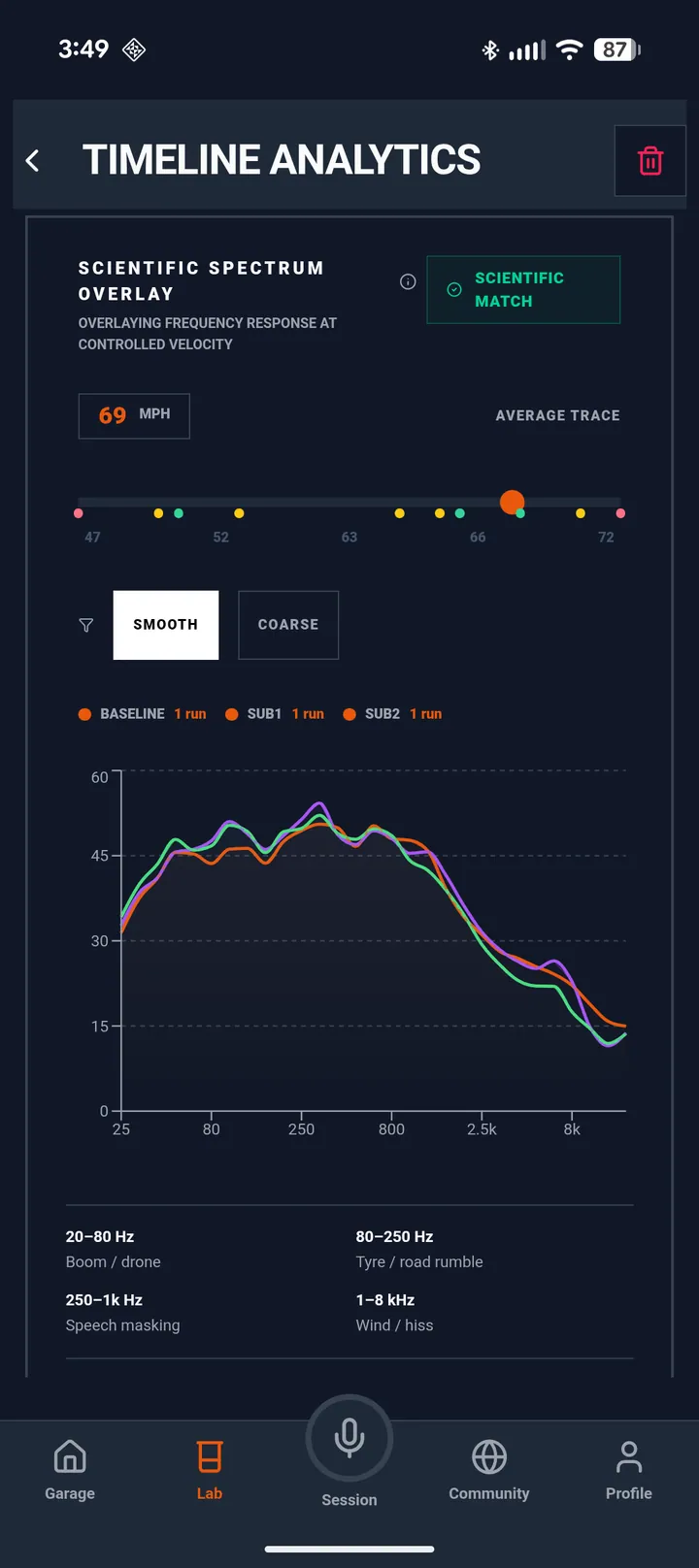
NVH stands for noise, vibration, and harshness. Engineers use the term for the sounds and physical sensations that shape how refined a car feels. Owners usually meet NVH in simpler language: tire roar, wind hiss, a steering-wheel buzz, an exhaust drone, or a rattle over broken pavement.
Noise is what you hear
Cabin noise can be spread across many frequencies, like tire hiss, or concentrated around a tone, like a whine or drone. A sound-level number tells you how much sound reached the microphone. A frequency spectrum adds clues about the character of that sound.
Vibration is what you feel
Vibration can reach the seat, floor, pedals, or steering wheel without being especially loud. Professional work may use accelerometers and rotational-speed information to connect a vibration with a wheel, shaft, engine, or motor order. A phone can document a pattern, but it cannot replace sensors mounted at the right points on the vehicle.
Harshness is the reaction
Harshness describes the abrupt or unpleasant impression created by noise and vibration: a sharp impact over a joint, a coarse engine response, or a body shake. It is partly a human judgment, which is why two cars with similar sound levels can feel very different.
What NVH Lab shows you
NVH Lab turns a normal drive into a saved Drive Test. You can see the cabin sound level, inspect its frequency pattern, add the result to the correct car, and compare it with a later drive.
That is useful when you want to:
- save a baseline before anything is wrong;
- check the same route after new tires or a repair;
- document where a hum or drone appears;
- compare with similar community cars when results exist.
Make your first Drive Test useful
- Choose a familiar road and legal speed you can repeat.
- Secure the phone in one position before moving.
- Keep windows, HVAC, load, and phone placement consistent.
- Let a passenger run the test.
- Repeat the route after the car or the noise changes.
Read the comparison as a pattern. A repeated increase across many frequencies is different from one narrow tone appearing. Neither result names a failed part by itself.
How professional testing differs
Engineering tests use calibrated microphones, accelerometers, controlled positions, and defined operating conditions. Standards such as ISO 5128 exist so vehicle interior sound can be measured reproducibly.
A phone is best for repeated comparisons with the same device. Use professional equipment when an absolute level, certification result, or component diagnosis matters. If a noise is sudden, severe, or linked to steering, braking, tires, or warning lights, arrange a physical inspection rather than relying on an app result.