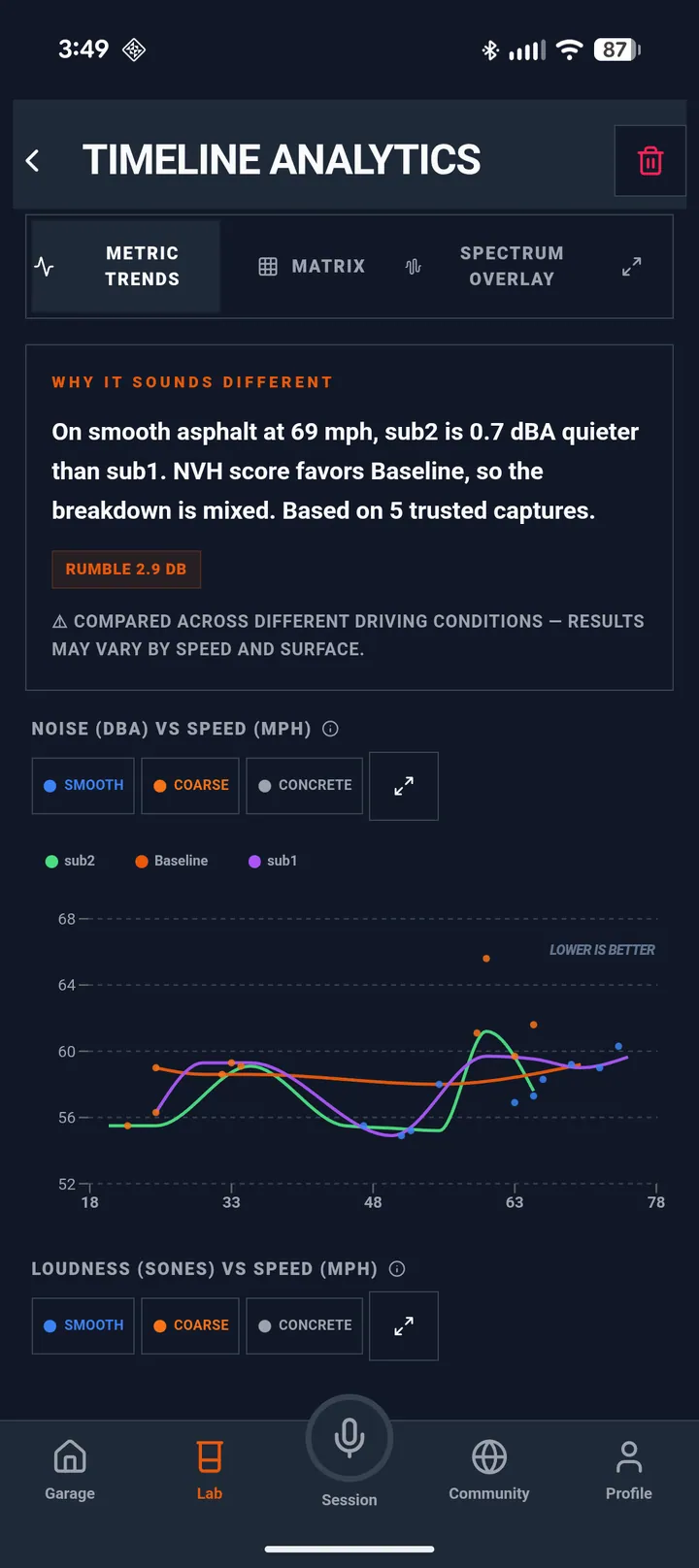
A hum at highway speed can come from tires, a wheel-end component, the driveline, airflow, or more than one source at once. The sound alone cannot identify the failed part. What you can do is record when it appears and make the pattern easier for a technician to reproduce.
Deal with safety first
Stop driving and arrange an inspection if the noise appeared suddenly, is getting severe, follows an impact, or comes with steering, braking, heat, smoke, odor, visible tire damage, or a warning light. Do not perform deliberate swerves, hard braking, or phone interaction to test a noise on a public road.
The NHTSA tire guidance is a useful starting point for pressure, wear, and visible-damage checks.
Notice what the hum follows
After a normal drive, write down four things:
- the speed where the hum starts and where it is strongest;
- whether a coarse road makes it much louder than smooth asphalt;
- whether throttle changes it while road speed stays similar;
- recent tire work, wheel impacts, repairs, or modifications.
A large change with the road surface often means tire-road noise is part of what you hear. A hum that follows vehicle speed across several surfaces deserves a wheel, tire, brake, and bearing inspection. A sound that changes strongly with throttle may direct attention toward the powertrain or driveline. These are clues for inspection, not at-home diagnoses.
Record the drive in NVH Lab
- Set up the phone while parked and secure it in one position.
- Let a passenger operate the app on a familiar, legal route.
- Record the stretch where the hum normally appears.
- Add the speed range, road surface, and any recent vehicle change.
- Repeat the same route later only when conditions are safe.
The Drive Test keeps the sound level and frequency pattern with your car. That makes it easier to see whether the same tone returned, whether it moved, or whether a repair changed the result. A spectrum can describe the sound; it cannot name the damaged component.
What to bring to the workshop
A concise report is more useful than a guessed part: "The hum starts near 55 mph, peaks near 65, changes little with throttle, and is stronger on coarse pavement." Add the saved Drive Test and the date of any tire or repair work.
That will not replace a road test and physical inspection, but it gives the technician a much better starting point than "it hums sometimes."