There is no single best car-noise app. A basic sound meter, a car-specific test journal, and a workshop vibration tool solve different problems. Start with the job, not the longest feature list.
Disclosure: ANEA LLC publishes NVH Lab. This guide explains where it fits alongside other kinds of measurement apps; it is not a paid comparison.
For a quick sound-level check
If you only want a rough answer to "how loud is it here?", use a straightforward sound meter. On iPhone, the NIOSH Sound Level Meter is a sensible choice when published validation matters.
It is designed for sound exposure rather than cars. It will not remember which tires were fitted, where a hum appeared, or what changed between two drives.
For checking your car over time
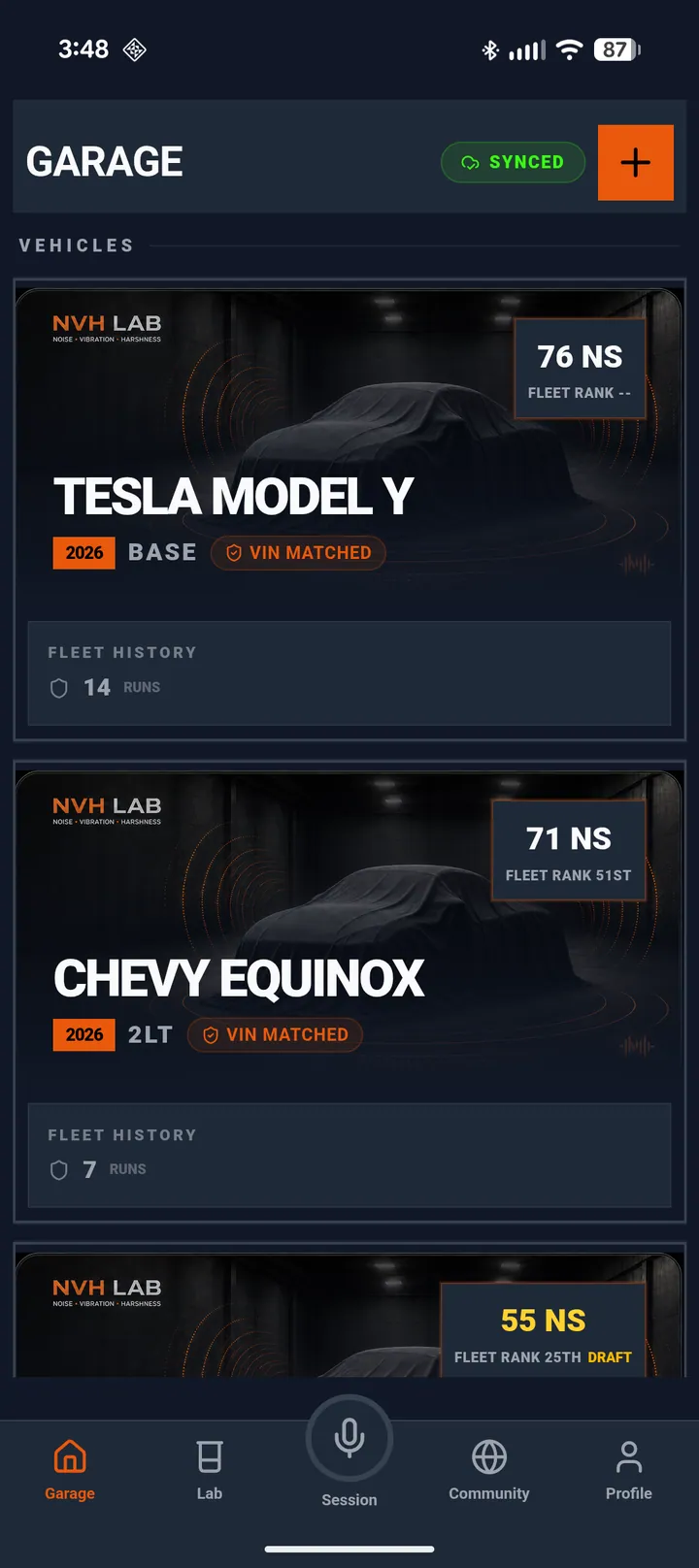
This is the job NVH Lab is built for. Add your car, record a Drive Test, and keep the result with the conditions that produced it. Repeat the same route after fitting tires, repairing a seal, adding sound treatment, or noticing a new noise.
The useful difference is the history:
- recordings stay attached to the right car;
- before-and-after tests live together instead of in screenshots;
- the spectrum shows whether a change is tonal or spread across many frequencies;
- community Drive Tests add context when similar cars have been recorded.
NVH Lab does not replace a calibrated meter or a physical diagnosis. Its advantage is making repeat tests easy enough that you can build a useful history of your own car.
For workshop vibration work
A technician tracing a vibration tied to wheel speed, driveshaft speed, or engine order needs a specialist workflow. Tools such as Vibrate Software NVH are built for that job. Most owners do not need this level of analysis unless a workshop is already investigating a rotational vibration.
What matters more than the app
Secure the phone before moving and let a passenger operate it. Use the same phone position, road, speed, and HVAC setting when comparing two drives. A repeatable setup is worth more than a screen full of impressive-looking decimals.
The short version: use a sound meter for a quick level, NVH Lab for a car-specific history, and a specialist tool when a workshop needs rotational vibration analysis.