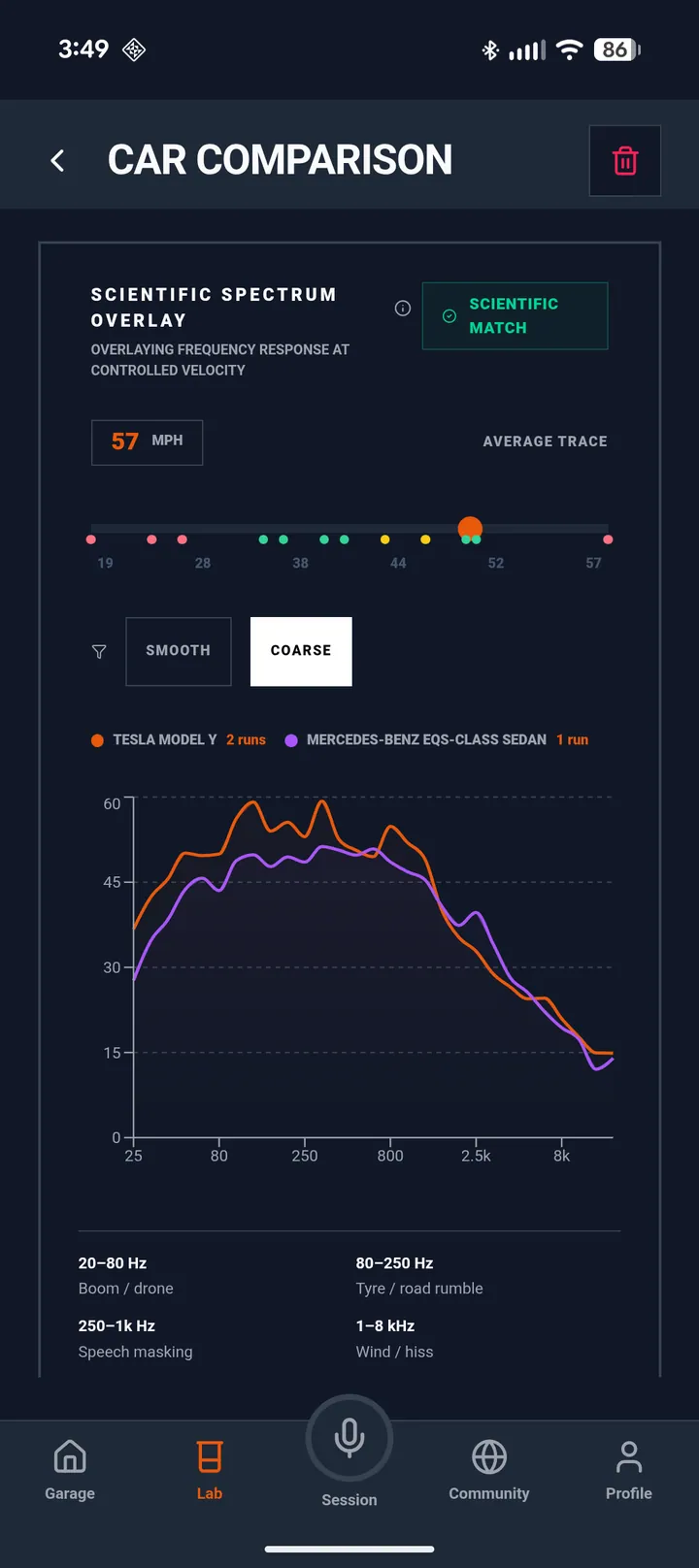
A quiet-car ranking can help you make a shortlist. It cannot tell you which car will sound best on your commute. Tires, pavement, speed, wind, and even the microphone position can move a cabin-noise result enough to change the order.
Use magazine tests as a shortlist
Good publications control more variables than a casual phone video. Car and Driver explains its cabin-noise test at a fixed speed on a consistent road. Consumer Reports describes using both measured readings and trained subjective evaluation.
Results are most useful within the same publication and test method. Combining numbers from different magazines, YouTube videos, road surfaces, speeds, and instruments creates a precise-looking list that is not a fair comparison.
Be wary of one-number reviews
A single dBA reading misses the character of the sound. Two cabins can show a similar level while one has a tiring low-frequency boom and the other has broad tire hiss. A video can also make a method look rigorous while leaving out the road surface, wind, tire fitment, HVAC state, microphone processing, or averaging time.
This does not make reviewer tests useless. It means their strongest claim is usually "these cars compared this way on this road," not "this is the universal quietest car."
Test your shortlist on your roads
During a normal test drive, pay attention on both smooth and coarse pavement. Listen at the speed you use most. Check for tire roar, wind hiss around the mirrors, and low-frequency boom. Do not operate a phone while driving; set it up while parked and use a passenger.
With NVH Lab, save a Drive Test for each car using the same phone position and a similar route. The comparison will not be laboratory-grade, but it will reflect the conditions you actually care about.
Check what owners have recorded
Loading the current public fleet summary… You can check whether your model is represented before a test drive. When only a few cars have contributed, treat the result as context rather than a verdict.
The best long-term comparison is your own car against itself. Save a baseline when it is new to you, then repeat the route after tires, repairs, or wear have changed it.